Want to Feel More Confident Assessing and Supporting Clients with ADHD Autism?
Evidence-based training designed for mental health professionals, covering assessment, differential diagnosis, and post-diagnostic support.

Here's what's currently available - more trainings are added regularly.
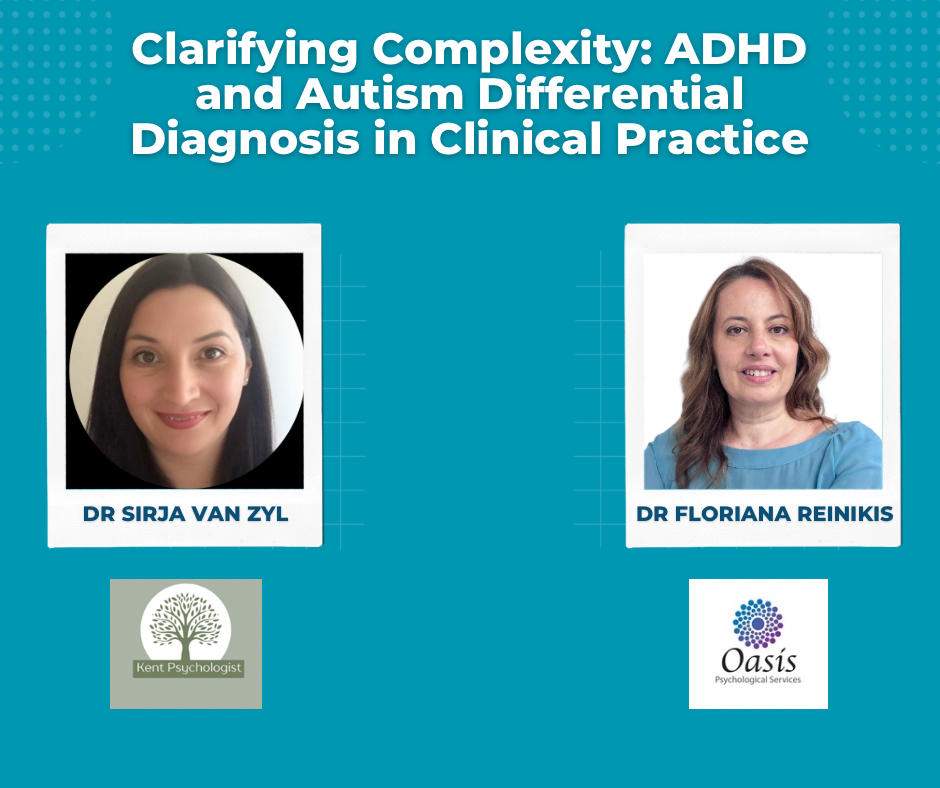
Clarifying Complexity: ADHD and Autism Differential Diagnosis in Clinical Practice
Is It ADHD, Autism, or Both? Sharpen Your Differential Diagnosis Skills
Whether your caseload is mostly children and adolescents, adults, or spans the full lifespan, this on-demand webinar (5 hours of content across 3 modules, with 6 months of access) will walk you through the clinical reasoning needed to differentiate ADHD and autism presentations, recognise where they genuinely overlap, and identify when a co-occurring AuDHD profile is the more accurate picture. You'll learn how to:
- Differentiate ADHD and autism presentations across the key areas clinicians assess, including attention, sensory sensitivity, social interaction, interests and engagement, response to routine and novelty, fidgeting and restlessness, and emotional responses
- Understand the role of diagnostic overshadowing in differential diagnosis, and how it can mask a co-occurring AuDHD presentation
- Recognise why a thorough developmental history is essential to an accurate differential, not just a box to tick
- Learn how to structure a richer clinical interview that goes beyond checklists, so you can pick up the nuance that complex presentations require
- Work through case vignettes and practical resources designed to translate the theory into real clinical thinking, so you walk away with tools you can use straightaway
ADHD Assessment and Diagnosis in Adults and Children: Embracing a Neuroaffirmative Framework
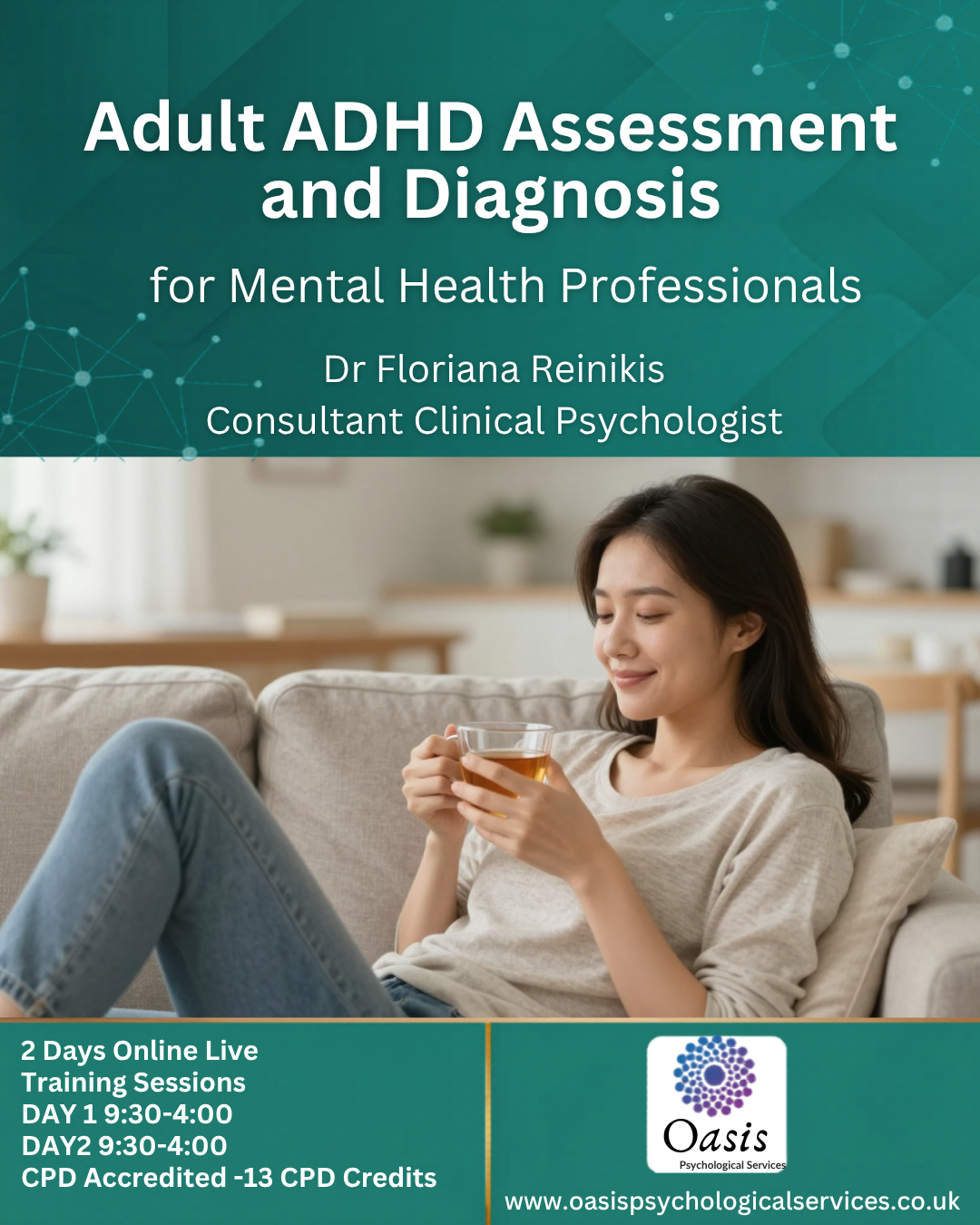
ADULT ADHD ASSESSMENT AND DIAGNOSIS TRAINING
This practical, fully updated online two-day training is designed for qualified mental health professionals looking to strengthen their confidence and competence in assessing ADHD in adults.
The training covers:
- ADHD and its neurobiology
- Differential diagnosis and co-occurring conditions
- Female and other nuanced presentations of ADHD, including masking and compensatory strategies
- Application of NICE guidelines and current diagnostic criteria
- Structured interviews (DIVA, ACE) and screening measures
- Essential components of a high-quality ADHD assessment
- A clear framework for person-centred, strengths-based assessment — while remaining comprehensive, clinically robust, and fully aligned with NICE guidance
- Post-diagnostic recommendations for thoughtful, holistic follow-up support
- Several dates throughout the year
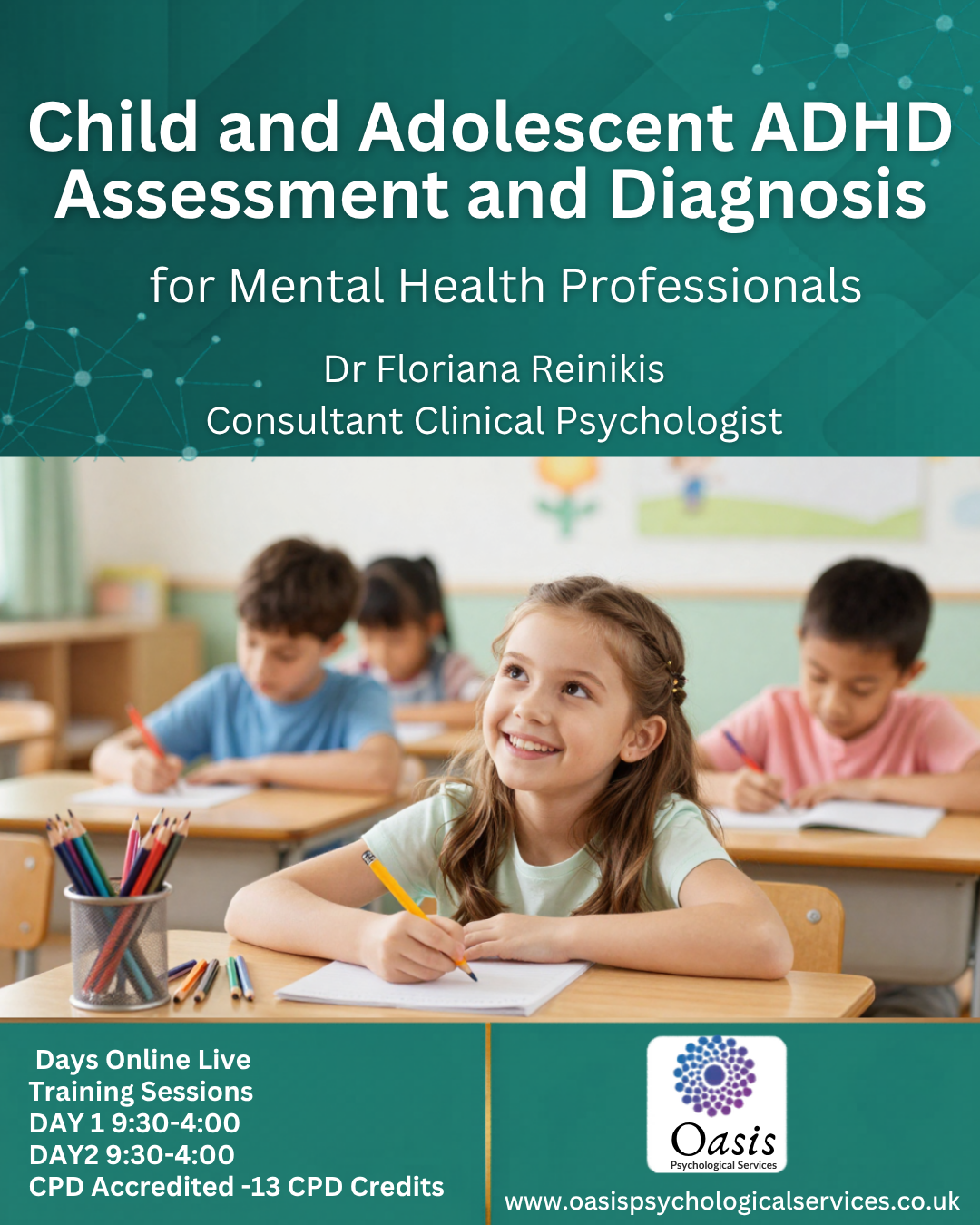
CHILD AND ADOLESCENT ADHD ASSESSMENT TRAINING
This practical online two-day training is designed for qualified mental health professionals looking to strengthen their confidence and competence in assessing ADHD in children and adolescents.
The training covers:
- ADHD and its neurobiology
- Differential diagnosis and co-occurring conditions
- Application of NICE guidelines and current diagnostic criteria
- Structured interviews (ACE) and relevant screening measures
- The wider context of assessment, including the role of families, carers, and schools
- Adapting interviews and clinical questioning to the young person's developmental stage
- Essential components of a high-quality ADHD assessment
- A clear framework for person-centred, strengths-based assessment — while remaining comprehensive, clinically robust, and fully aligned with NICE guidance
- Post-diagnostic recommendations for thoughtful, holistic follow-up support
Working Therapeutically with Autistic and ADHD Children and Adolescents
A Practical 2-Day Live Online CPD Training for Clinicians
Live on Zoom: 5th & 6th November
Time: 9:30am – 4:00pm (both days)
Replay Access: Available for 8 weeks
Delivered by: Dr Floriana Reinikis & Dr Sirja van Zyl
Many clinicians working with autistic and ADHD children and young people recognise a familiar clinical reality: even when evidence-informed interventions are delivered competently, outcomes can vary, and thoughtful adaptation is often required to ensure therapy is truly effective, accessible, and meaningful for neurodivergent clients.
This practical two-day live online training is designed to support exactly that process of clinical refinement.
The training draws on evidence-informed therapeutic approaches and selected coaching-informed principles to provide practical ways of adapting work with autistic, ADHD and AuDHD children and young people.
Through case discussions, clinical examples, and practical demonstrations, the training focuses on translating theory into nuanced, real-world application that you can immediately integrate into your work. Examples may draw from approaches such as CBT, ACT and emotion-regulation work, alongside formulation, psychoeducation, parent work and selected coaching-informed strategies.
This training has been developed from many years of clinical practice, informed by current evidence and shaped through close work with neurodivergent children, young people and their families. The content has also been refined through what young people and parents have told us about what has, and has not, felt helpful in therapeutic work.
What The Training Will Cover
- Establishing the therapeutic framework: identifying the focus of the work, considering who the client is, involving parents and carers appropriately, developmental considerations, contracting and structuring sessions.
- Confidence in adapting interventions for autistic and ADHD children and young people
- Therapy, coaching and formulation: considering what type of support may be needed and how therapeutic and coaching-informed approaches can complement one another.
- Working therapeutically with autistic children and adolescents: practical, neurodiversity-affirming adaptations and strategies illustrated through clinical examples.
- Working therapeutically and using coaching-informed strategies with children and adolescents with ADHD: including consideration of executive functioning, self-regulation and everyday functioning.
- Working with AuDHD presentations: considering how autistic and ADHD characteristics may interact and what this can mean for formulation and intervention.
- Working collaboratively with parents, carers and wider systems: considering how change may sometimes require work beyond the therapy room.
- Clinician fatigue and feeling stuck: exploring how working with complex neurodivergent presentations can sometimes leave clinicians feeling uncertain, depleted or unsure how best to move forward.
Resource Pack Included
All participants will receive a clinical resource pack designed to support application of the learning in everyday practice.
The resources have been developed and refined through clinical work with neurodivergent children, young people and their families and will include a selection of:
- practical therapeutic tools and templates
- psychoeducational resources
- worksheets for children, young people and families
- coaching-informed resources that can be used appropriately within clinical practice
- materials that can be adapted across different therapeutic settings
The resources are intended to support participants in translating the principles discussed during the training into their own work.
Who Is This Training For?
This training is intended primarily for qualified mental health professionals and clinicians whose existing professional role involves therapeutic or psychologically informed work with children, young people and families.
This may include clinical, counselling, educational psychologists, psychotherapists, therapists, counsellors, mental health nurses, occupational therapists and other appropriately qualified practitioners.
Professionals working in coaching or related roles may also find aspects of the training relevant, but participants should only apply therapeutic or coaching approaches that fall within their own professional training and scope of practice.
Professional scope of practice
This training is intended as continuing professional development. Attendance does not confer a professional qualification or professional title as a therapist, psychotherapist, counsellor or coach, and does not extend a participant’s existing scope of practice. Participants should apply the approaches and strategies discussed only within the boundaries of their existing professional training, competence and role.
Dr Sirja van Zyl’s Bio
Dr Sirja Van Zyl is a Clinical Psychologist with over 25 years’ experience working with children and young people across NHS, independent and specialist mental health settings. She has a particular interest in the assessment and support of autistic children and young people, ADHD, tics and Tourette’s Syndrome, mental health difficulties and complex functional presentations. Throughout her career, Sirja has developed extensive expertise in neurodevelopmental assessment, formulation, and therapeutic intervention, with a focus on understanding each young person within their individual context. She is also involved in research, and is currently jointly supervising a DClinPsy research project exploring secondary burnout in clinicians working with autistic young people.
Sirja has held senior clinical roles within NHS mental health and neurodevelopmental services, including CAMHS and the role of Pathway Lead within an NHS neurodevelopmental service. She is Co-Founder and Co-Director of Kent Psychologist and Clinical Lead for the Autism and ADHD assessment team, where she has developed a high-quality, compassionate, and neuroaffirmative assessment and post-diagnostic support service.
Alongside her clinical practice, Sirja has developed a range of specialist support programmes, including post-diagnostic parent support and a ‘Support for Schools’ programme. She works closely with schools to increase understanding of Autism and ADHD, promote neuroaffirmative practice, and help educational settings create environments where neurodivergent children and young people can thrive. Sirja regularly delivers supervision, training, and presentations to healthcare professionals, schools, families, conferences and charitable organisations. Sirja’s therapeutic work draws on a range of evidence-informed therapeutic models, including CBT, ACT, EMDR, CBIT, and systemic approaches. She is passionate about adapting these models thoughtfully when working with neurodivergent clients, ensuring that interventions are accessible, individualised, and aligned with neurodiversity-affirming principles.
EARLY BIRD OFFER (first 15 places only): £230 Standard Fee: £275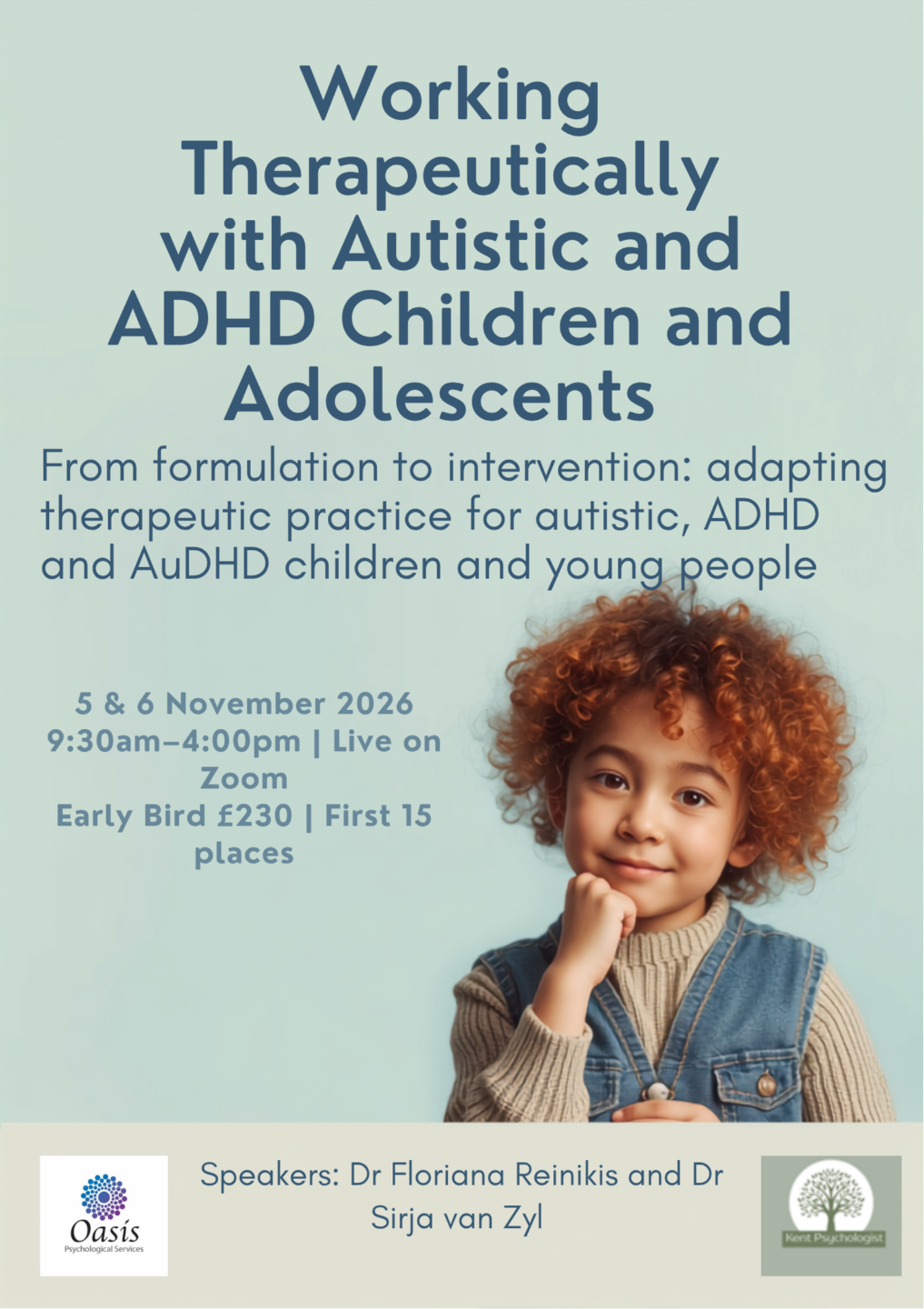
NICE TO MEET YOU
Hi, I'm Dr Floriana Reinikis
I'm a Consultant Clinical Psychologist with over 25 years' experience working with children, young people and adults across NHS, independent, neurodevelopmental, mental health and educational settings, and I also live with ADHD, diagnosed in adulthood. That combination of clinical depth and lived experience shapes everything I teach: I know these presentations from both sides of the therapy room.
I spent 17 years within NHS Child and Adolescent Mental Health Services, working closely with autistic and ADHD children, young people and their families across mainstream and specialist schools, specialist educational provisions, and services supporting looked-after children. For the past eight years, I've led my own specialist independent practice, Oasis Psychological Services, where I head a multidisciplinary team delivering assessment, diagnosis and ongoing support for neurodivergent children, young people and adults.
I'm a BABCP-accredited Cognitive Behavioural Psychotherapist and an accredited ADDCA ADHD Adult and Family Coach. I'm also a nationally recognised trainer in ADHD assessment, diagnosis and clinical practice, having delivered specialist training to NHS Trusts and independent mental health professionals across the UK, so when you train with me, you're learning from someone who teaches this for a living, not just someone who happens to also run workshops.
What I care about most is helping clinicians move past the gap between "evidence-informed" and "actually works in the room", thoughtfully adapting therapeutic approaches so they're genuinely effective, accessible and meaningful for neurodivergent clients. That's exactly what I bring to every training I deliver.


"I really enjoyed the training and feel that I have gained depth and practical learning around ADHD and co-occurring conditions"
- Dr Vicky Charles, Clinical Psychologist
"This training is an absolute MUST for anyone considering undertaking ADHD assessments, as well as for those already engaged in assessment work. It is extremely comprehensive and delivered in a considered and thorough way. Thank you!"
- Dr Melita Ash, Clinical Psychologist
"Excellent 2 days. You definitely need to advertise this course more, it was so informative."